01
Tarps
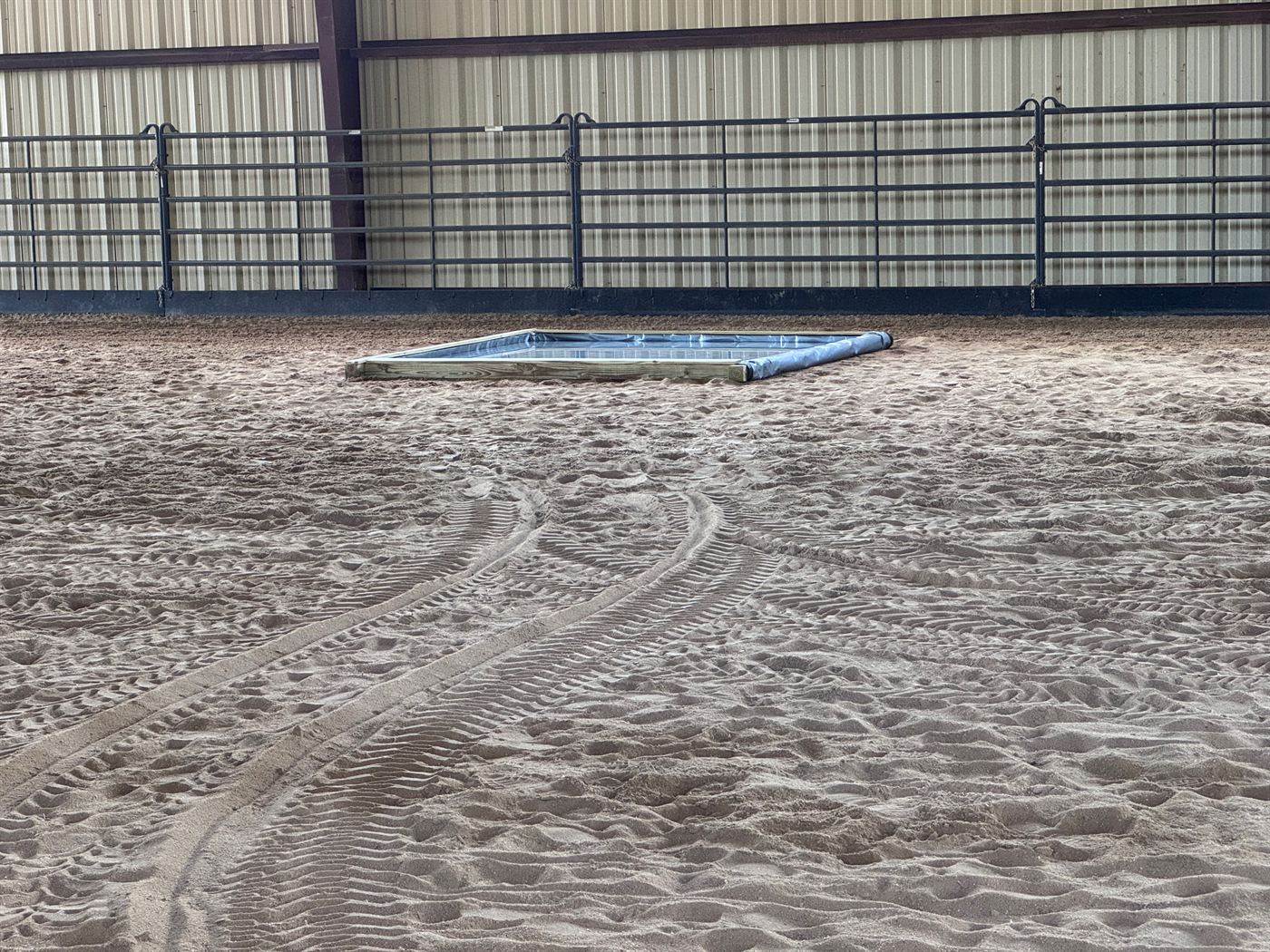
BeginnerWalk over, beside and under crinkly, shifting tarps.
- Trust in footing
- Calm with noise underfoot
Obstacle guide
Our equine obstacle course Georgia riders can use year-round sits inside a covered arena. Below is a guide to each obstacle: what it teaches, how challenging it is and how to introduce it, for horses, mules and donkeys alike.
Walk over, beside and under crinkly, shifting tarps.
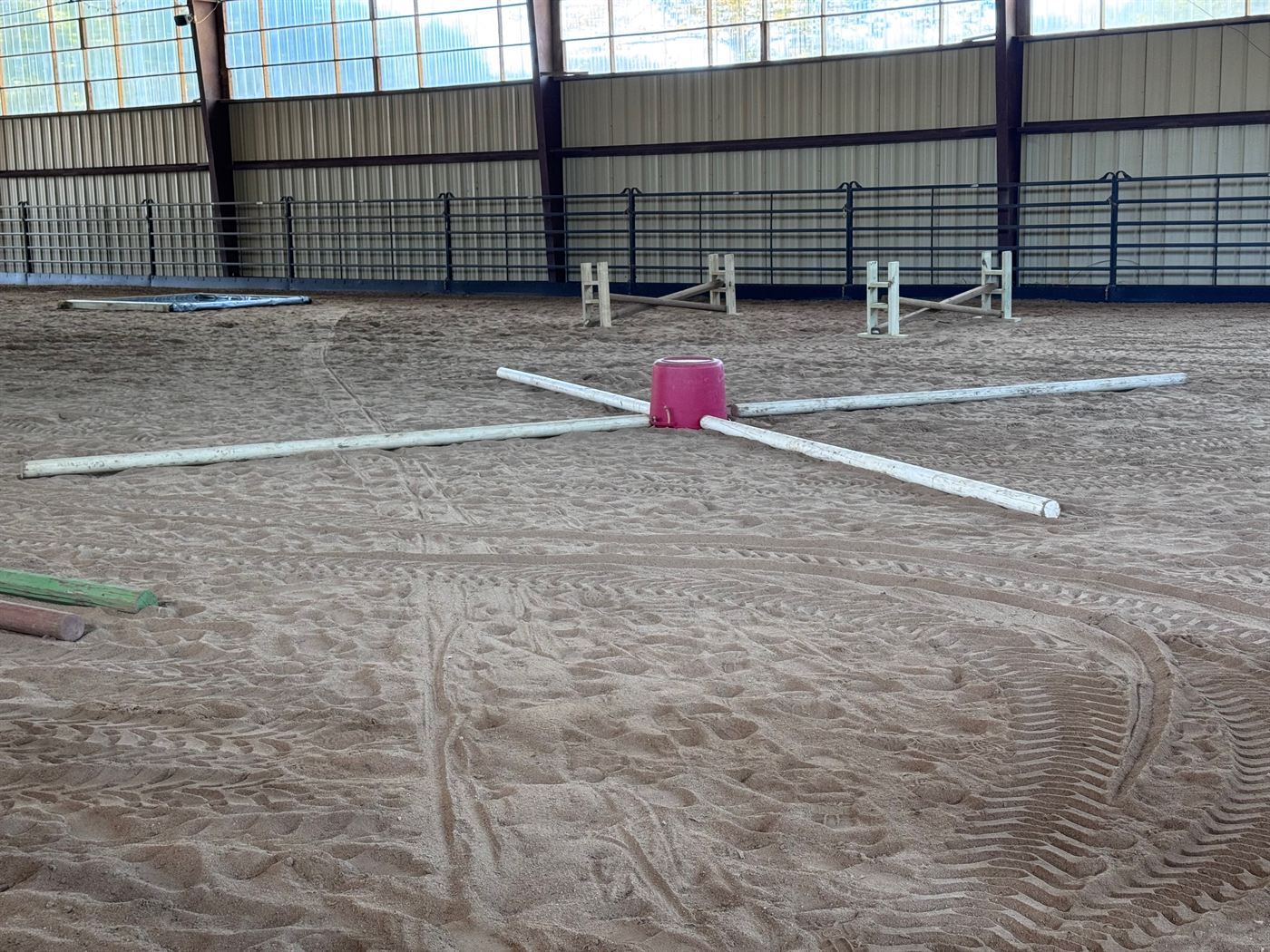
Learn to stay relaxed around flapping and waving fabric.
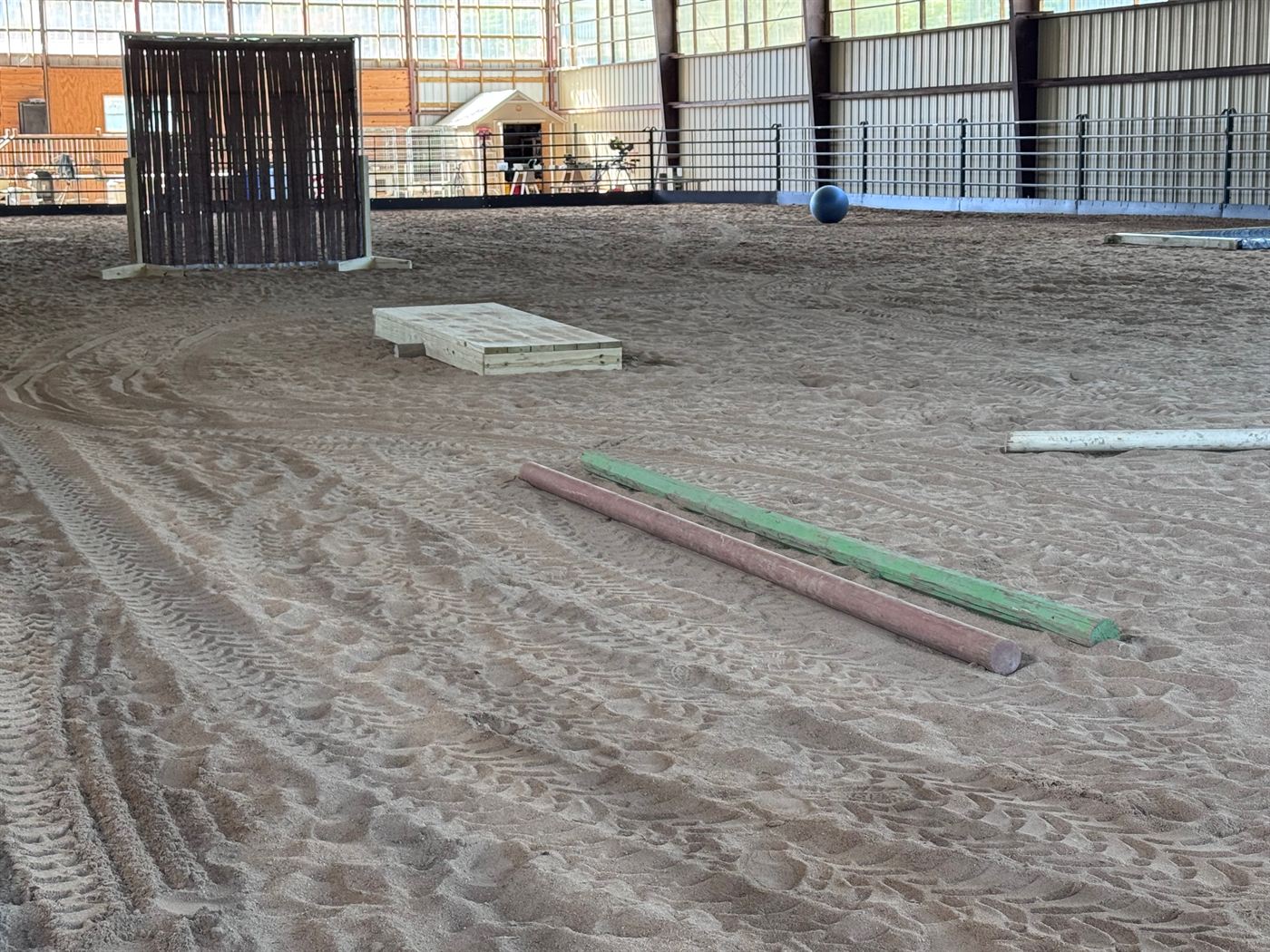
Practice careful footing and trusting your rider on a hollow-sounding surface.
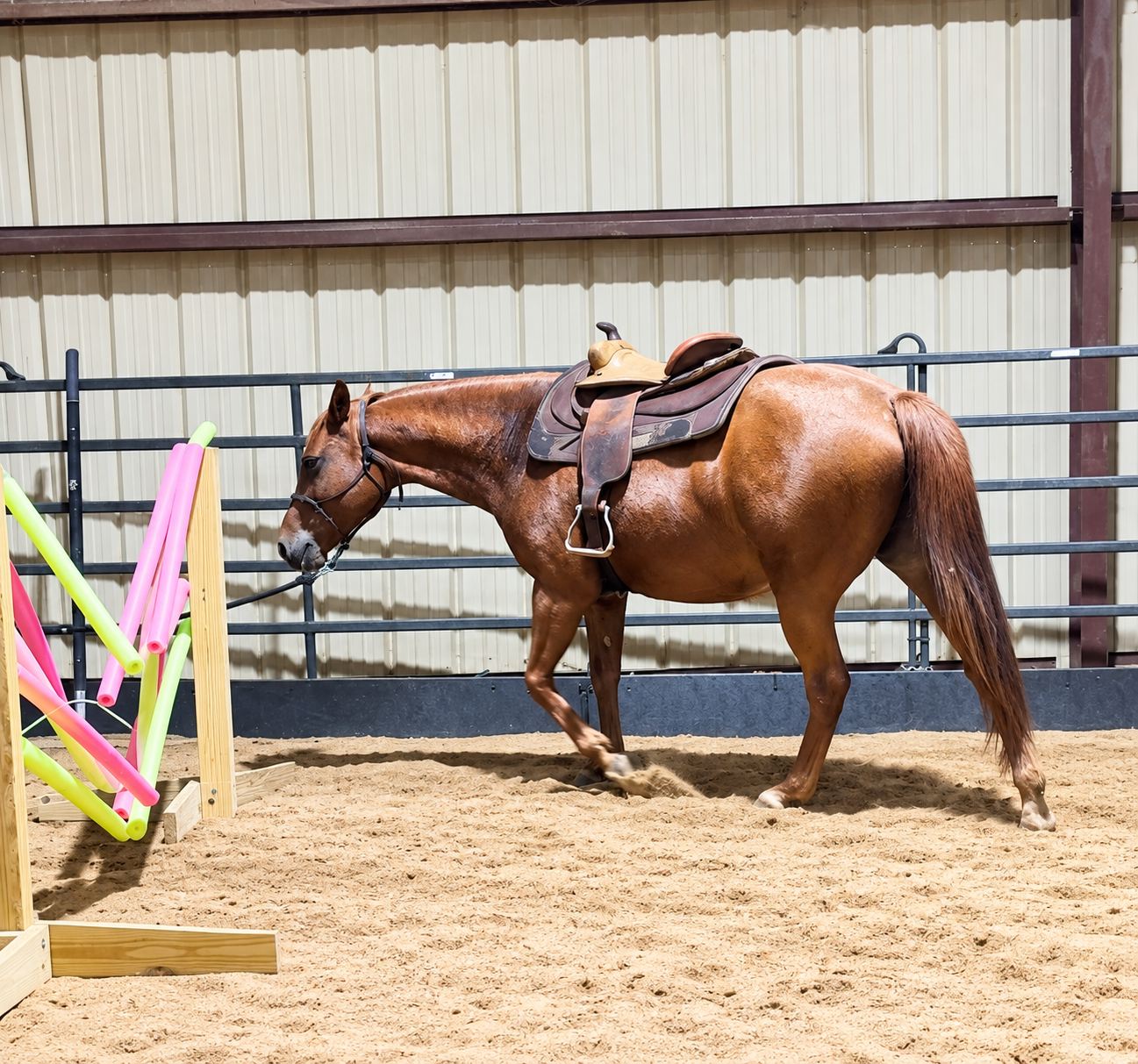
Soft, wobbly and unfamiliar: a gentle first step in desensitization.
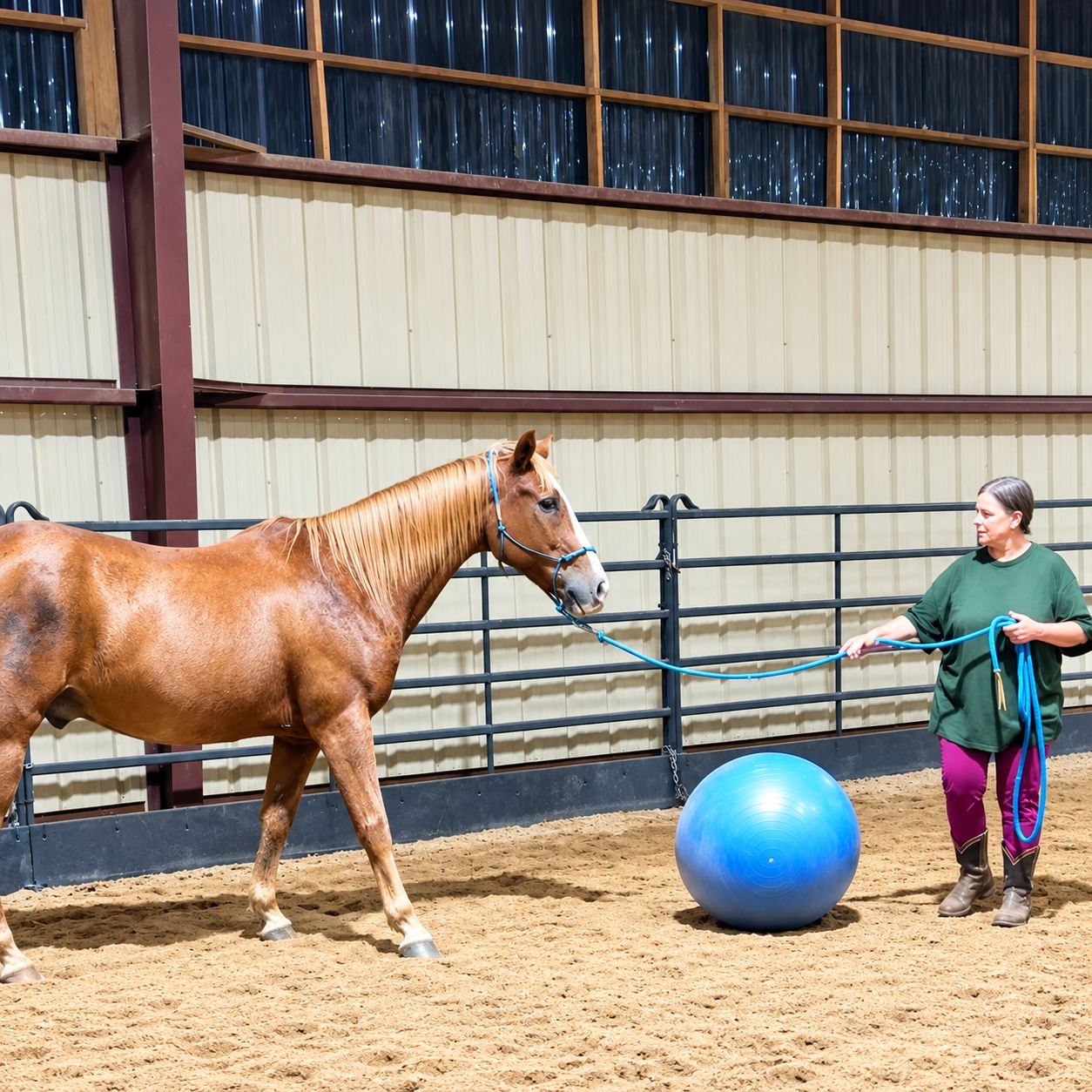
Rattles, clatter and other sounds, introduced at a pace the horse can handle.
Open, pass through and close gates from the saddle or on the ground.
Build body awareness and patience in narrow passages and corners.
Sharpen your transitions and your horse's attention to your cues.
The course changes, so ask us what is set up for the next event.
Building confidence
Desensitization works best when it is gradual. Most animals move through three stages, and there is no rush to reach the last one.
Stand at a comfortable distance and let your animal look, sniff and breathe. Move closer only while they stay relaxed.
Lead them over, through or past the obstacle from the ground, so you can read their body language up close.
Once the obstacle is easy in hand, try it from the saddle, then add a second pass in the other direction.
New to the idea? Our guide to horse desensitization training in Georgia explains the basics, and 25 trail obstacles every horse should master shows how course work carries over to the trail.
Before you come
On the day
A mule obstacle course Georgia owners can trust needs to respect how mules think: they tend to look carefully before committing. You are welcome to take that time. Read more in our mule and donkey FAQs.
Reserve a riding block for the next second-Saturday event.
Register for the Next Event